
3D Cone Beam CT Scan in Bastrop, TX
A 3D cone beam CT scan is a type of dental X-ray that creates a three-dimensional picture of your teeth, jaws, and the structures around them. A standard dental X-ray shows a flat image, which can leave questions about bone, nerves, and tooth roots unanswered. When your dentist needs a closer look before planning care, a 3D scan can fill in those details.
At Spring St. Dental in Bastrop, Texas, we use cone beam CT (CBCT) imaging in our office as part of our dental services, including the planning of guided dental implants. Our team uses these scans to check bone quality and plan implant placement. This page explains how the scan works, what it is used for, and what research says about radiation.
How Does a 3D Cone Beam CT Scan Work?
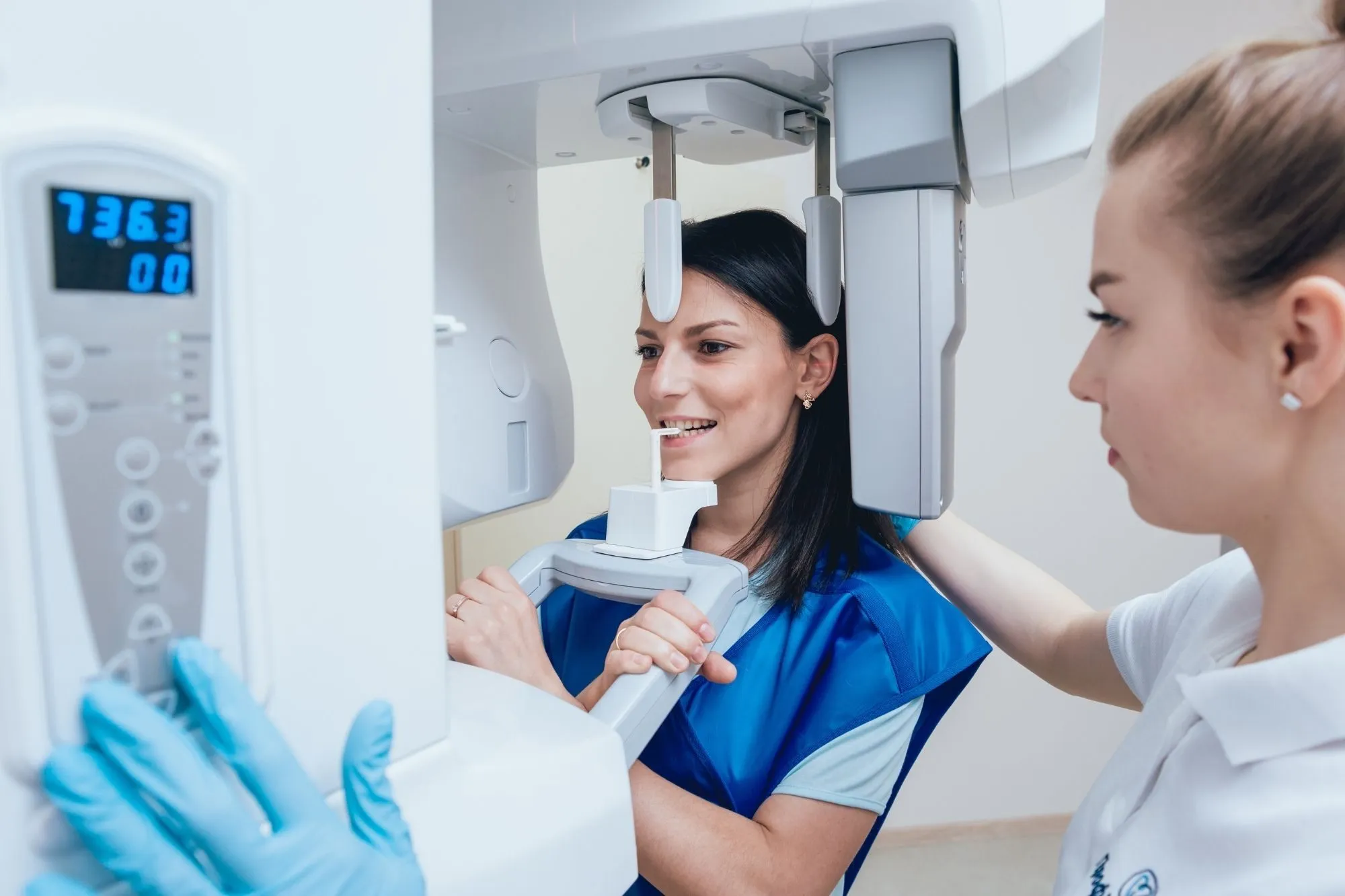
During a CBCT scan, an X-ray source rotates around your head and sends a cone-shaped beam through the area being studied. The scanner collects that data and rebuilds it into a three-dimensional image of your teeth, jaws, and nearby structures. You stay still while the scanner moves around you.
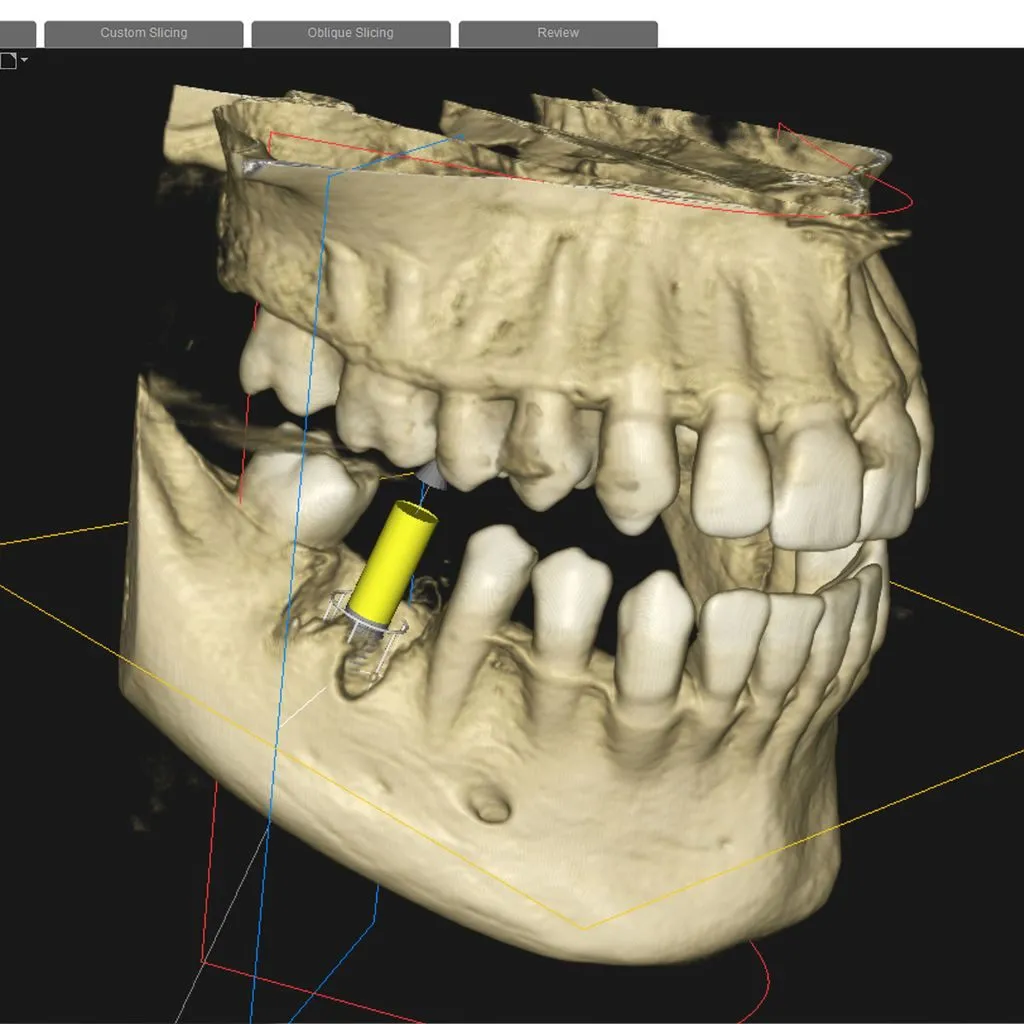
Once the scan is complete, the data becomes a 3D model that your dentist can rotate and view from different angles. That lets us study your anatomy from angles a single image cannot show.
Cone beam CT is not the same as a hospital CT scan. Dental CBCT scanners are designed for the head and jaw area, and your dentist can explain each step before your scan.
What Are the Advantages of a 3D Cone Beam CT Scan?
A 3D scan can answer questions that a two-dimensional image leaves open, which supports both diagnosis and planning. Here are the main advantages.
Detailed Views of Bone and Tooth Roots
Three-dimensional images show bone height, bone width, and the position of tooth roots from several angles. This helps your dentist spot changes that may be hidden on a flat X-ray.
Better Treatment Planning
With a clear view of your anatomy, we can plan treatments such as dental implants and anticipate challenges before the procedure begins.
One Scan for Several Questions
One scan can show your teeth, jaw, and nearby structures together, so your dentist can review several areas from one set of images. That gives us a fuller picture of your oral health in a single visit.
Together, these advantages give your care team clearer information to work from.
What Are the Common Uses for 3D Cone Beam CT Scans?
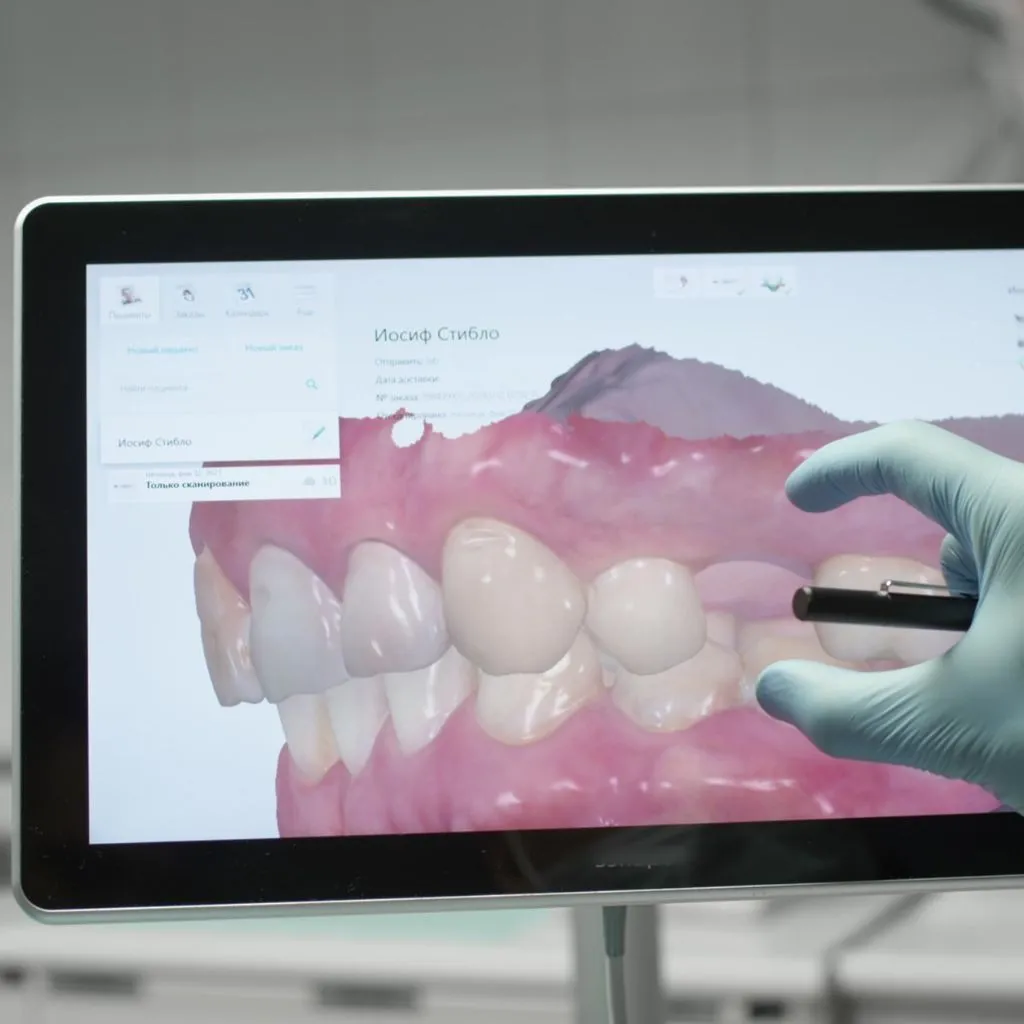
The U.S. Food and Drug Administration (FDA) lists several uses for dental CBCT, including implant planning, finding abnormal teeth, evaluating the jaws and face, diagnosing cavities, root canal diagnosis, and assessing dental trauma. Not every scan fits every patient, so your dentist decides whether one is useful in your situation.
Implant planning is one of the most common reasons we use CBCT. The scan also supports the CT-guided approach we use for implants in our office.
CBCT can also help with root canal therapy. A 3D view may show root shapes and signs of infection that are hard to see on a flat image. You can read more about the role of 3D imaging in root canal care on our blog.
Beyond implants and root canals, a scan may help us study impacted or abnormally positioned teeth and the structure of your jaw. This information can also guide planning for adult orthodontics.
Is a 3D Cone Beam CT Scan Safe?
According to the FDA, the clinical benefit of a medically appropriate X-ray exam outweighs the small radiation risk. Dental CBCT does use X-rays, so radiation is part of the conversation, and the FDA notes that doses from dental CBCT are generally lower than other CT exams but typically higher than conventional dental X-rays.
Because of this, the American Dental Association and the FDA recommend using CBCT only when it is needed for diagnosis or treatment. The FDA also notes that younger patients are more sensitive to radiation, so it is worth asking whether a scan is necessary and whether other options use less radiation. You can raise these questions with your dentist before any scan.
Payment and Insurance Options for Your Dental Care
Imaging is one piece of your care, and we want the costs to be clear. While we are out-of-network, we file claims with all insurance providers on your behalf and verify your benefits before treatment. You can read more about how we work with insurance on our site. Many plans offer significant coverage for out-of-network providers, and we provide detailed estimates of your coverage and out-of-pocket costs.
If you do not have insurance, our Plan for Health membership may help, and our financing options can help you spread out the cost of care.

Ready to schedule your appointment?
Contact Spring St. Dental today to book your consultation.


Schedule Your 3D Cone Beam CT Scan With Spring St. Dental
Our team at Spring St. Dental focuses on restoring, enhancing, and preserving your dental health through advanced, conservative techniques, and our in-office CBCT scanner supports that approach. Dr. Matthew Lassen and Dr. Brian Romney work together to plan care in a calm, relaxed setting, from routine visits to implant treatment.
If you are planning dental implants or have a question that a flat X-ray could not answer, we would be glad to talk with you about whether a 3D scan makes sense for your care. To get started, contact our office to schedule your consultation.
Visit Our Office
We’re conveniently located at 1207 Chestnut St., Bastrop, TX. Our office offers easy access with plenty of on-site parking. We look forward to welcoming you in a comfortable and modern environment!



Visit Us
Mon & Wed 7-5(Lunch 12-1)
Tues 7-5 (Lunch 12-1:30)
Thurs 7-3:30
Closed Fri-Sat-Sun