
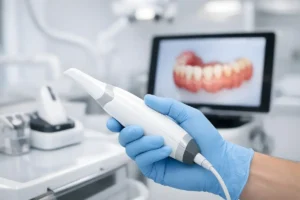
 Modern technology transforms how dentists plan and place dental implants, enabling advanced diagnostic tools that offer unprecedented precision and success rates. Digital diagnosis now serves as the foundation for predictable implant outcomes, using sophisticated imaging systems to evaluate bone structure, identify potential complications, and create detailed treatment plans before any procedure begins. Patients benefit from enhanced accuracy, reduced surgical risks, and improved long-term implant stability when comprehensive digital assessment guides every decision.
At Spring Street Dental, Dr. Romney and Dr. Meghan Bhakta, DDS, use state-of-the-art diagnostic technology to ensure optimal dental implant placement for patients throughout Bastrop, Smithville, and Elgin. Our CBCT scanner and advanced planning software allow us to visualize your unique anatomy in three dimensions, creating customized treatment plans that account for bone density, nerve position, and the final restorative outcome before surgery even begins.
How CBCT Imaging Improves Implant Planning
Cone beam computed tomography represents a breakthrough in implant diagnostics, providing three-dimensional views of your jawbone structure with remarkable clarity. This advanced imaging technology captures detailed information on bone volume, bone quality, and the precise location of critical structures such as nerves and sinuses. Research published in Bioengineering demonstrates that CBCT scans enable dentists to obtain three-dimensional images to assess bone quality and position implants with high accuracy, significantly reducing the risk of surgical complications.
Traditional two-dimensional X-rays cannot provide the comprehensive view necessary for complex implant cases. CBCT technology fills this gap by providing comprehensive anatomical visualization from multiple angles, enabling dentists to precisely measure bone dimensions and identify potential challenges before they become problems. This diagnostic precision translates directly into improved surgical outcomes, with studies showing that digital planning based on CBCT data leads to reduced angular and linear deviations during implant placement compared with conventional freehand techniques.
Computer-Guided Surgery Enhances Precision
Digital diagnosis extends beyond imaging to include sophisticated planning software creating virtual surgical guides. These computer-generated guides translate diagnostic information into precise surgical execution, allowing dentists to place implants at the exact angles, depths, and positions determined during the planning phase. The technology essentially provides a roadmap for surgery, minimizing guesswork and maximizing accuracy.
Research confirms the advantages of this digital approach. Studies evaluating guided implant placement demonstrate mean angular deviations of approximately 3.66 degrees with digital navigation compared to 5.82 degrees with freehand placement. This enhanced precision becomes particularly valuable in complex cases involving limited bone availability, proximity to vital structures, or immediate implant placement. At Spring Street Dental, we use these advanced planning tools to ensure your full arch restoration achieves both functional excellence and aesthetic harmony.
Benefits of Digital Diagnosis for Implant Patients
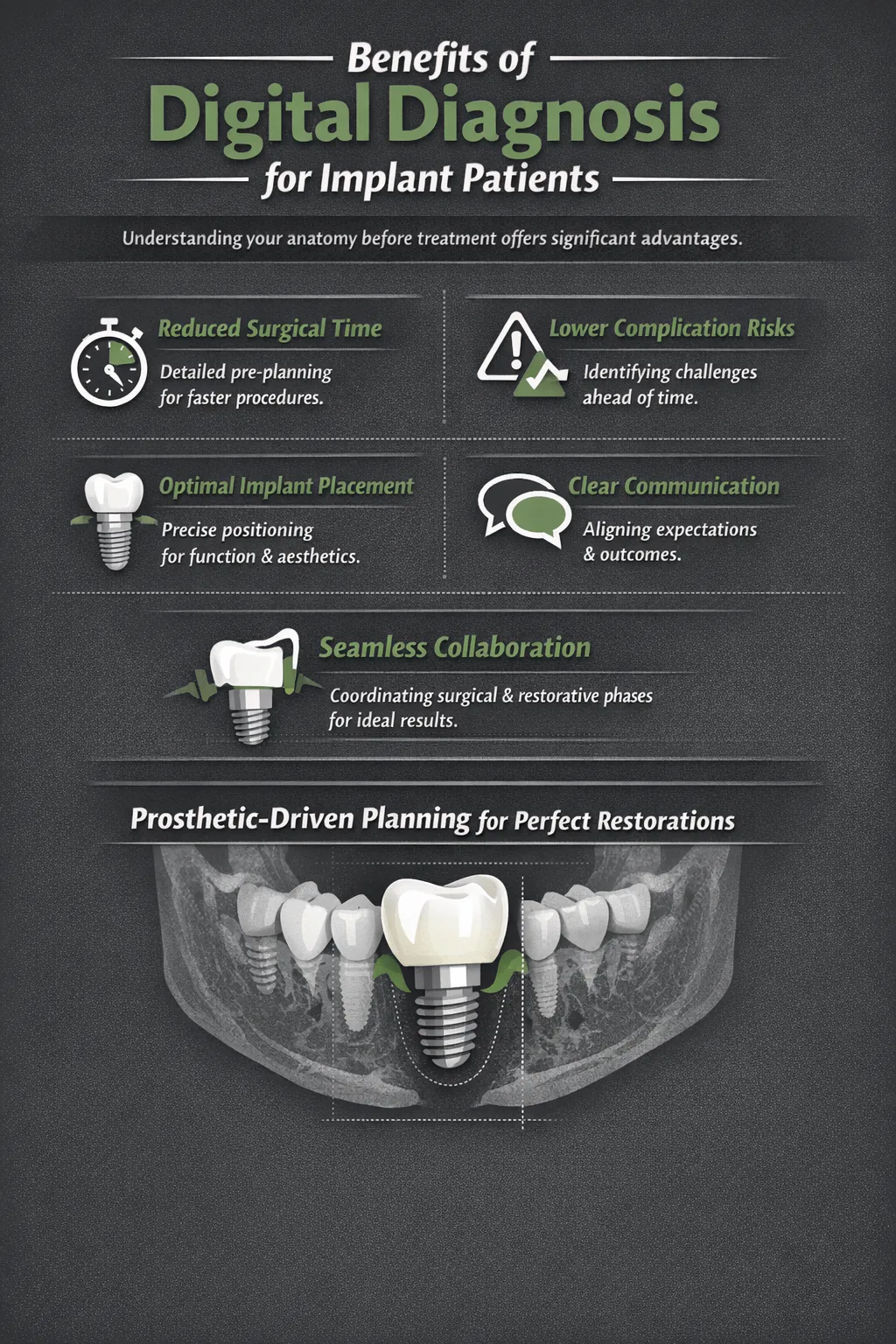
Understanding your unique anatomy before treatment offers numerous advantages beyond surgical precision. Consider how comprehensive digital diagnosis improves your implant experience:
- Reduced surgical time through thorough preoperative planning
- Lower risk of complications by identifying anatomical challenges early
- Improved implant positioning for optimal function and aesthetics
- Enhanced communication about treatment expectations and outcomes
- Minimally invasive procedures with smaller incisions and faster healing
Digital diagnostics also enables better collaboration between the surgical and restorative phases of treatment. When we can visualize the final CEREC crown in a day restoration during the planning stage, we ensure the implant position supports both the structural integrity and natural appearance of your new tooth. This prosthetically driven approach considers the end result from the very beginning, eliminating compromises that arise from less comprehensive planning.
Advanced Technology at Spring Street Dental
The integration of digital diagnostic tools represents a commitment to evidence-based dentistry, prioritizing your safety and treatment success. Modern implant planning combines CBCT imaging, intraoral scanning, and advanced software to create comprehensive digital models of your mouth. These virtual representations enable precise measurements, simulation of surgical procedures, and the fabrication of custom surgical guides, translating the digital plan into clinical reality.
Studies demonstrate that practices utilizing CBCT technology for implant planning achieve success rates exceeding 95 percent over five years. This impressive track record stems from the ability to assess critical factors before surgery, including bone density measurements, helping predict implant stability and success. For patients with conditions such as gum disease or compromised bone structure, digital diagnosis becomes even more essential for identifying treatment modifications to improve outcomes.
Partner with Spring Street Dental for Advanced Implant Care in Bastrop
Digital diagnosis transforms dental implant treatment from a procedure with inherent uncertainties into a highly predictable, scientifically planned intervention. The combination of CBCT imaging, computer-guided planning, and advanced surgical techniques allows us to place implants with unprecedented accuracy while minimizing risks and optimizing long-term success. Dr. Romney and Dr. Meghan Bhakta, DDS, bring years of experience working with cutting-edge technology to create implant treatment plans customized to your unique needs.
Our practice serves patients throughout Bastrop, Smithville, Elgin, and surrounding Central Texas communities, offering out-of-network services while filing claims for all insurance providers. Contact us today to schedule a consultation and discover how digital diagnosis can improve your implant experience.