
 You wake up with a dull ache in your jaw, a headache radiating from your temples, and teeth that feel oddly sore for no clear reason. Maybe your partner has mentioned strange grinding sounds during the night, or maybe you have noticed small chips and flat spots forming on teeth you thought were perfectly healthy. These are the kinds of symptoms most people brush off or blame on stress, but they often point to bruxism, a condition where you clench or grind your teeth unconsciously while you sleep. Left unaddressed, the damage adds up quietly until a cracked tooth or chronic jaw pain forces the issue.
At Spring St. Dental, we see this pattern regularly in patients across Bastrop, TX, and the surrounding areas. Our team uses advanced diagnostic tools, including a CBCT cone beam CT scanner and digital imaging, to evaluate not just the visible wear on your teeth but the underlying bone and joint health driving your symptoms. A custom nightguard is one of the most effective ways to protect your teeth from the consequences of bruxism, and we work with each patient individually to determine whether one is the right fit.
How Bruxism Damages Your Teeth Over Time
Bruxism generates a surprising amount of force. Research estimates the pressure can reach well beyond what your teeth experience during normal chewing, sometimes exceeding 250 pounds per square inch. Over months and years, this repeated stress leads to enamel erosion, microfractures, and sensitivity that often seem to appear out of nowhere.
Visible and Hidden Signs of Grinding
The visible signs include flattened biting surfaces, chipped edges, and teeth that look shorter than they used to. But the less obvious damage can be more concerning. Grinding places significant strain on your temporomandibular joint (TMJ), which may lead to chronic jaw soreness, clicking or popping sounds when you open your mouth, and headaches concentrated around the temples. According to the American Dental Association, more than 70% of dentists have reported increased signs of teeth grinding and clenching in their patients in recent years. If you already have dental restorations like crowns or fillings, bruxism can shorten their lifespan significantly.
What a Custom Nightguard Does
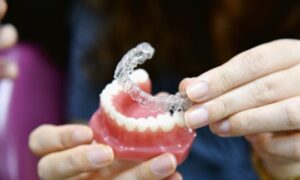
A nightguard is a removable oral appliance made from durable material and designed to fit snugly over your upper or lower teeth. It creates a protective barrier between your top and bottom arches so the surfaces cannot grind directly against each other while you sleep.
Custom Versus Store-Bought Options
Store-bought options exist, but they come with serious limitations. A boil-and-bite guard from a pharmacy is bulky, often uncomfortable, and rarely fits well enough to stay in place through the night. A custom nightguard, on the other hand, is fabricated from precise digital impressions of your teeth. The result is a slim, comfortable appliance that distributes biting force evenly across the arch and actually stays where it belongs.
The benefits of a well-fitted custom nightguard include:
- Reduced enamel wear and protection against cracked or chipped teeth
- Less strain on the TMJ, which may help with jaw pain and morning headaches
- Longer lifespan for existing dental restorations, including crowns and fillings
- Improved sleep quality for both you and anyone sleeping nearby
Many patients are surprised at how much better they feel after just a few weeks of consistent use.
Who Should Consider a Nightguard
Not every person who occasionally clenches their teeth needs a nightguard. But certain signs suggest you may benefit from one. If you wake up with jaw soreness or morning headaches more than a couple of times per week, if your dentist has pointed out unusual wear patterns during a routine visit, or if you have already cracked a tooth without any obvious cause, these are all strong indicators.
Stress, Sleep, and Contributing Factors
Stress is one of the most common triggers for bruxism, but it is far from the only one. Sleep disorders, certain medications, caffeine, and alcohol use can all contribute. For patients dealing with TMJ discomfort alongside grinding, our team evaluates the full picture and may recommend additional approaches to managing jaw pain. Spring St. Dental offers protective oral appliances tailored to your needs, and a nightguard is often the first line of defense.
Protect Your Smile With Spring St. Dental
At Spring St. Dental, we take a thorough, diagnostic-first approach to determining whether a nightguard is right for you. Using our CBCT imaging and digital scanning technology, we can identify wear patterns, joint changes, and bone-level details a standard visual exam may miss. If a nightguard is recommended, the fabrication process is straightforward, comfortable, and built around your specific anatomy.
If you have been waking up with jaw pain, noticing changes in your teeth, or simply want to find out whether bruxism could be affecting your oral health, we are here to help. Reach out to our team today to schedule a consultation and take the first step toward protecting your smile.