
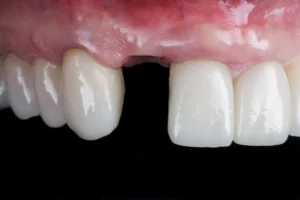
Losing a tooth is one thing. Figuring out what comes next is another. Whether the extraction was planned for months or decided in an afternoon, many patients leave the dental chair with the same question: What are my options for replacing this tooth, and how soon do I need to act? The answer matters more than most people realize, because leaving a gap in your smile for too long can set off a chain reaction that affects your bite, your jawbone, and even the teeth around the empty space.
At Spring St. Dental in Bastrop, TX, we walk patients through every stage of the post-extraction process, including a clear conversation about tooth replacement options. Understanding what is available before you need it takes the pressure off and helps you make a confident, informed decision. If you have recently had a tooth removed or are preparing for an upcoming tooth extraction, here is a straightforward breakdown of what your restoration options look like.
Why Replacing a Missing Tooth Matters
Not replacing a missing tooth is a choice, but it is rarely a consequence-free one. The surrounding teeth naturally drift toward the empty space over time, which can shift your bite and create alignment problems that are difficult and expensive to reverse.
Beyond the mechanical effects on neighboring teeth, the jawbone beneath a missing tooth begins to lose density once it no longer receives stimulation from chewing. This process, known as bone resorption, can change the shape of your face and jaw over time. The longer a gap remains unfilled, the more complex the eventual restoration tends to become. Acting sooner rather than later gives you more choices and typically better outcomes.
Tooth Replacement Options After an Extraction
There are several well-established options for replacing a missing tooth, and the right one depends on factors like the location of the tooth, your overall oral health, and how many teeth need to be replaced. We take time to review each possibility with you so the decision reflects your actual situation.
Dental Implants
Dental implants are widely regarded as the gold standard for tooth replacement, and for good reason. An implant consists of a titanium post placed directly into the jawbone, which fuses with the bone over a healing period and then supports a custom crown on top. Because the implant integrates with your existing bone, it is the only replacement option that actually prevents bone loss at the site of the missing tooth.
Implants function and feel much like natural teeth. You brush and floss around them the same way, and they do not rely on neighboring teeth for support. At Spring St. Dental, we use 3D cone beam CT technology to plan implant placement with a high level of precision, which improves outcomes and reduces recovery time. Implants do require adequate bone volume and a healing period of several months, so early planning is an advantage.
Dental Bridges
A dental bridge is a fixed restoration that replaces one or more missing teeth by anchoring to the natural teeth on either side of the gap. Those neighboring teeth, called abutments, are prepared to support crowns that hold the artificial tooth (or teeth) in place. Bridges are a strong, long-lasting solution for patients who are not candidates for implants or who prefer a fixed restoration without surgery. They can typically be completed in fewer appointments than an implant and are often covered at least partially by dental insurance. One consideration is that the abutment teeth require some preparation, so healthy neighboring teeth do take on a supporting role in this option.
Dentures and Partial Dentures
When multiple teeth are missing, complete or partial dentures are a well-established option that can restore much of your chewing function and appearance. Partial dentures are removable appliances that clip onto remaining healthy teeth, while complete dentures replace an entire arch. Modern denture materials have improved significantly, and many patients find them comfortable and functional.
Dentures do not prevent bone loss the way implants do, and they may require periodic adjustments as the jawbone changes shape over time. That said, for patients who have experienced significant tooth loss or who prefer a non-surgical path, a well-fitted denture can make an enormous difference in daily quality of life.
Full Arch Restoration
For patients who are missing most or all of their teeth, full arch restoration offers a fixed, implant-supported solution that replaces an entire arch with a stable prosthesis. Unlike traditional dentures, full arch restorations are anchored by implants and do not need to be removed. They closely replicate the look and function of natural teeth and represent a long-term investment in quality of life for patients facing significant tooth loss.
Talk to Spring St. Dental About Your Options
Choosing the right tooth replacement comes down to your health, your timeline, and your goals, and the best time to explore that conversation is before a gap becomes a problem. We encourage patients to ask questions early and often, because the options available to you often expand the sooner you address a missing tooth.
Our team at Spring St. Dental is here to help you understand what fits your situation without pressure or confusion. Contact us to schedule an appointment and discuss which replacement option makes the most sense for your smile.